



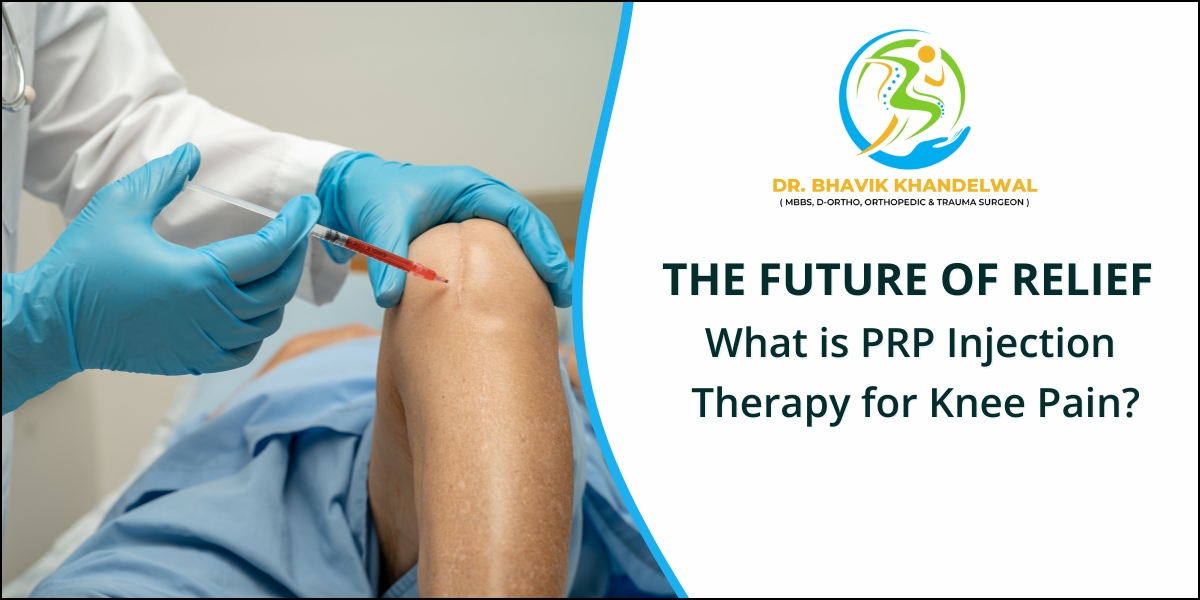
For millions suffering from chronic knee pain due to arthritis, injuries, or wear-and-tear, the search for lasting relief can feel endless. While traditional treatments like pain medication, physical therapy, and even surgery have their place, a cutting-edge, natural alternative is revolutionizing orthopedic care: Platelet-Rich Plasma (PRP) Injection Therapy. Touted as the future of regenerative medicine, PRP offers a promising path to healing that leverages your body’s own innate power.
What Exactly is PRP Therapy?
Platelet-Rich Plasma (PRP) therapy is a non-surgical, minimally invasive treatment that uses a concentrated form of your own blood to stimulate healing and reduce inflammation in damaged tissues.
The process is elegantly simple:
- Blood Draw: A small sample of your blood is taken, similar to a routine lab test.
- Centrifugation: The blood is placed in a special machine called a centrifuge, which spins at high speed to separate its components.
- Concentration: This spinning isolates and concentrates the platelets and growth factors—the crucial proteins that orchestrate tissue repair and regeneration.
- Injection: The resulting platelet-rich plasma is then precisely injected into the affected area of your knee under ultrasound guidance.
Once injected, this powerful concentration of healing factors kicks your body’s natural repair processes into high gear, reducing inflammation, promoting new tissue growth, and alleviating pain.
The Benefits for Knee Pain Sufferers
Why is PRP considered a breakthrough for knee conditions like osteoarthritis, ligament tears, and tendonitis?
- Natural & Autologous: It uses your own biological material, eliminating risks of allergic reactions or foreign substance rejections.
- Minimally Invasive: Performed in-clinic, it avoids the scars, lengthy recovery, and risks associated with surgery.
- Promotes True Healing: Unlike steroids that merely mask pain, PRP aims to repair the damaged structure of the knee.
- Faster Recovery: With no general anesthesia or incisions, patients can often resume light activities quickly.
- Potential to Delay Surgery: For many patients, PRP can provide significant, long-lasting relief, potentially postponing or even eliminating the need for joint replacement surgery.
What to Expect During and After Treatment
A PRP session typically takes about 60-90 minutes from start to finish. While the injection itself is relatively quick, some patients may experience temporary soreness or swelling at the injection site. This is a normal part of the inflammatory healing response. Improvement is usually gradual over several weeks as the regeneration process takes hold, and a series of injections may be recommended for optimal results.
Is PRP Therapy Right for You?
PRP is showing great promise for patients with mild to moderate osteoarthritis, sports injuries, and chronic tendon issues. However, it may not be suitable for those with severe bone-on-bone arthritis, certain blood disorders, or active infections. The only way to know for sure is to consult with a skilled orthopedic specialist who can evaluate your specific condition and medical history.
About Dr. Bhavik Khandelwal – Your Expert in Regenerative Orthopedics
If you are exploring advanced, non-surgical solutions for knee pain in Thane, consulting with an expert is crucial. Dr. Bhavik Khandelwal recognized as one of the leading Orthopedic Surgeon in Thane, specializes in regenerative treatments like PRP Therapy. Dr. Bhavik Khandelwal provides comprehensive care, from accurate diagnosis of knee osteoarthritis and sports injuries to personalized treatment plans.
FAQs on PRP for Knee Pain
1. Is PRP injection good for knee pain?
Yes, PRP injections can be very effective for knee pain caused by osteoarthritis, tendon injuries, and ligament damage by reducing inflammation and promoting the body’s natural healing.
2. How long does PRP last in the knee?
The effects of PRP therapy can last from 6 months to over 2 years, varying based on the severity of the condition and individual patient response.
3. What is the downside of PRP therapy?
Potential downsides include temporary pain or swelling at the injection site, the cost (as it’s often not covered by insurance), and the fact it may not work for everyone, particularly in advanced arthritis.
4. Which is better for knee pain: PRP or steroid shot?
PRP aims to heal the damaged tissue with long-term results, while a steroid shot primarily reduces inflammation and pain temporarily. PRP is often preferred for long-term healing, though steroids provide faster short-term relief.
5. What is the success rate of PRP for knees?
Studies show a success rate of approximately 70-85% for reducing pain and improving function in patients with mild to moderate knee osteoarthritis.