


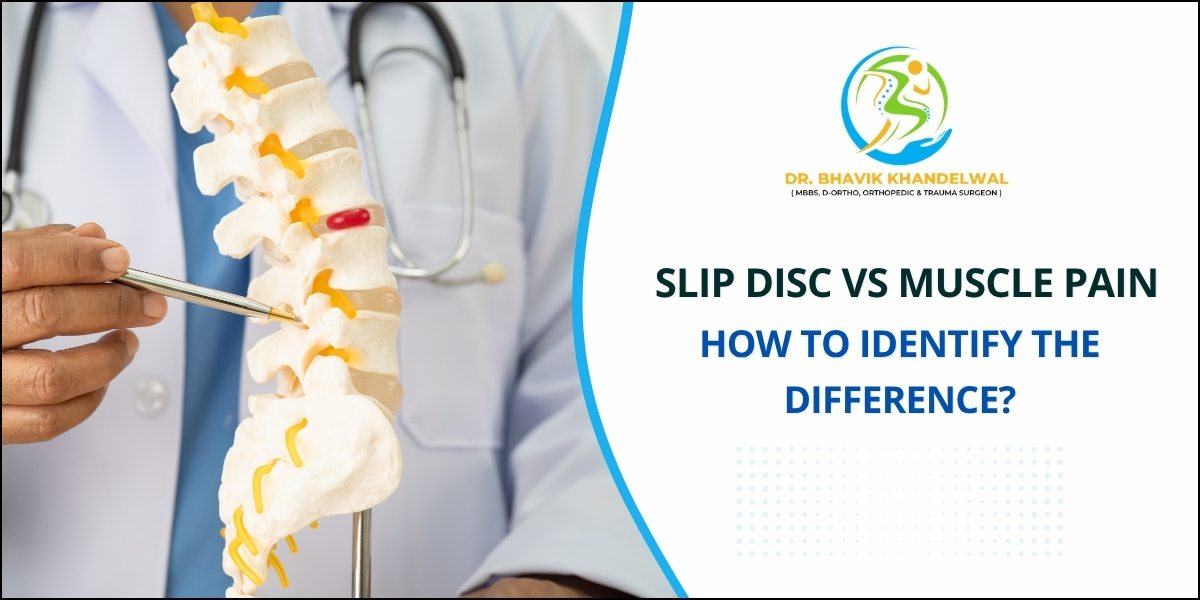
Back pain is one of the most common health problems today. Whether you sit long hours, lift heavy objects, or have poor posture, you may experience discomfort in your back. But not all back pain is the same. Two of the most common causes are a slip disc and muscle pain—and understanding the difference is crucial for proper treatment.
Let’s break it down in simple terms so you can identify what your body is trying to tell you.
What is a Slip Disc?
A slip disc (also called a herniated or prolapsed disc) occurs when the soft cushion between your spinal bones (vertebrae) moves out of place or ruptures. This can press on nearby nerves, causing pain and other symptoms.
Common Causes:
- Sudden heavy lifting
- Poor posture
- Age-related wear and tear
- Injury or trauma
What is Muscle Pain?
Muscle pain, also known as muscle strain, happens when muscles are overstretched or torn. It is usually less serious and often improves with rest.
Common Causes:
- Overuse of muscles
- Incorrect exercise or movement
- Sudden jerks or twists
- Stress and tension
Key Differences Between Slip Disc and Muscle Pain
| Feature | Slip Disc | Muscle Pain |
|---|---|---|
| Type of Pain | Sharp, shooting pain | Dull, aching pain |
| Pain Location | May radiate to arms or legs | Usually localized |
| Movement Impact | Pain worsens with movement | Improves with gentle movement |
| Numbness/Tingling | Common | Rare |
| Muscle Weakness | Possible | Uncommon |
| Recovery Time | Weeks to months | Few days to weeks |
Symptoms You Should Not Ignore
Signs of Slip Disc:
- Pain spreading to legs (sciatica) or arms
- Tingling or numbness
- Weakness in limbs
- Difficulty standing or walking
Signs of Muscle Pain:
- Tightness in muscles
- Mild swelling
- Pain when touching the area
- Stiffness after activity
When to See a Doctor?
You should consult a specialist if:
- Pain lasts more than a week
- You experience numbness or tingling
- Pain is severe or worsening
- You have difficulty walking or standing
Ignoring these signs can lead to complications, especially in the case of a slip disc.
Treatment Options
For Muscle Pain:
- Rest and avoid strain
- Ice or heat therapy
- Gentle stretching
- Pain relief medications
For Slip Disc:
- Physiotherapy
- Medications for pain and inflammation
- Lifestyle changes
- In severe cases, surgical intervention
Prevention Tips
- Maintain good posture
- Avoid lifting heavy weights incorrectly
- Exercise regularly
- Strengthen core muscles
- Take breaks if sitting for long hours
About Dr. Bhavik Khandelwal – Orthopedic Doctor in Thane
If you are experiencing persistent back pain or symptoms of a slip disc, consulting an expert is essential. Dr. Bhavik Khandelwal, a trusted spine specialist in Thane, offers advanced diagnosis and personalized treatment for slip disc and other spinal conditions. With a patient-focused approach and modern treatment techniques, he helps individuals recover faster and return to a pain-free life.
Visit : Dr. Bhavik Khandelwal | Orthopedic Doctor in Mumbra, Thane | Trauma & Joint Replacement Surgeon
Contact Number : +91 8657383349
Frequently Asked Questions
1. How can I tell if my back pain is serious?
If your pain includes numbness, weakness, or radiates to your limbs, it could be more than just muscle pain—seek medical advice.
2. Can a slip disc heal on its own?
Yes, mild cases can improve with rest, physiotherapy, and proper care.
3. Is bed rest good for back pain?
Short rest helps, but prolonged bed rest can worsen stiffness and delay recovery.
4. Can exercise worsen a slip disc?
Wrong exercises can worsen it, but guided physiotherapy helps recovery.
5. How long does muscle pain last?
Usually a few days to 2 weeks, depending on severity.