




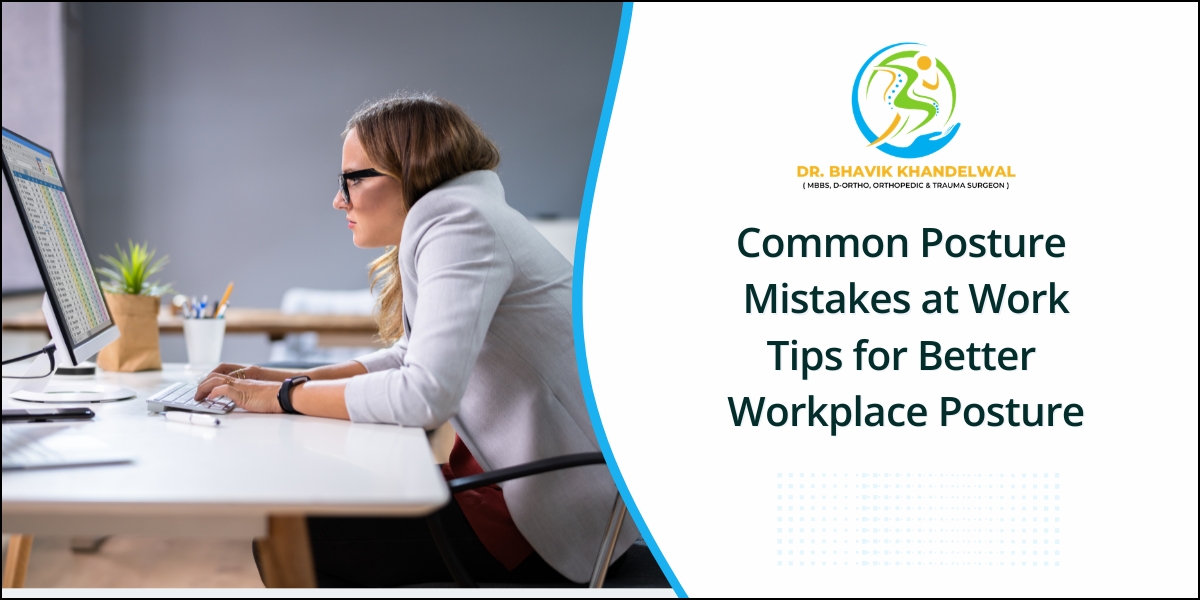
Most people spend long hours sitting at a desk, using computers, or standing in one place while working. Over time, poor posture can lead to neck pain, back pain, shoulder stiffness, headaches, and even reduced productivity. The good news is that small changes in your daily habits can make a big difference.
Why Good Posture Matters
Good posture helps your muscles, joints, and spine work efficiently. It reduces unnecessary strain on your body and improves comfort throughout the day. Poor posture, on the other hand, can lead to:
- Neck and shoulder pain
- Lower back pain
- Muscle fatigue
- Reduced flexibility
- Poor circulation
- Increased risk of long-term spine problems
Whether you work from an office or home, maintaining proper posture is essential for your overall health.
Common Posture Mistakes at Work
1. Slouching While Sitting
One of the most common mistakes is leaning forward or slumping in your chair.
Why it’s harmful:
- Increases pressure on the spine
- Weakens back muscles
- Causes neck and shoulder pain
How to fix it:
- Sit with your back fully supported.
- Keep your shoulders relaxed.
- Maintain the natural curve of your lower back.
2. Looking Down at Your Laptop
Many people work with laptops placed too low, forcing them to bend their neck for hours.
Why it’s harmful:
- Leads to “tech neck”
- Causes stiffness and headaches
- Strains neck muscles
How to fix it:
- Raise your laptop using a stand.
- Position the screen at eye level.
- Use an external keyboard and mouse whenever possible.
3. Sitting for Too Long
Even perfect posture becomes unhealthy if you stay in the same position for several hours.
Why it’s harmful:
- Tight muscles
- Poor blood circulation
- Increased risk of back pain
How to fix it:
- Stand up every 30–60 minutes.
- Walk around for a few minutes.
- Stretch your neck, shoulders, and legs regularly.
Poor Desk Setup
Chair at the Wrong Height
If your chair is too high or too low, it places unnecessary stress on your knees, hips, and spine.
Correct setup:
- Feet should rest flat on the floor.
- Knees should be at a 90-degree angle.
- Elbows should also remain around 90 degrees while typing.
Keyboard and Mouse Too Far Away
Stretching your arms forward all day can strain your shoulders and wrists. Keep your keyboard and mouse close enough so your elbows stay near your body while working.
Monitor Positioned Incorrectly
Your monitor should be directly in front of you—not off to one side. The top of the screen should be at or just below eye level, approximately an arm’s length away.
Standing Posture Mistakes
People who stand for long hours also develop posture problems. Common mistakes include:
- Locking the knees
- Leaning on one leg
- Bending forward repeatedly
- Wearing uncomfortable footwear
To improve standing posture:
- Distribute your weight evenly on both feet.
- Keep your shoulders relaxed.
- Wear supportive shoes.
- Change positions regularly.
Simple Exercises to Improve Posture
Adding a few stretches during your workday can reduce stiffness and improve posture. Try these simple exercises:
- Shoulder rolls
- Neck stretches
- Chest-opening stretches
- Standing back extensions
- Hamstring stretches
- Short walks every hour
These exercises take only a few minutes but can greatly reduce muscle tension.
When Should You See an Orthopedic Specialist?
Occasional stiffness usually improves with better posture and regular movement. However, medical evaluation is important if you experience:
- Persistent neck or back pain
- Pain lasting several weeks
- Tingling or numbness in the arms or legs
- Difficulty standing or walking
- Pain that interferes with daily activities
Early diagnosis helps prevent minor posture-related problems from becoming chronic conditions.
Tips for Better Workplace Posture
Follow these simple habits every day:
- Sit with your back supported.
- Keep your feet flat on the floor.
- Position your monitor at eye level.
- Avoid crossing your legs for long periods.
- Keep your shoulders relaxed.
- Take movement breaks every hour.
- Stretch regularly.
- Stay physically active outside work.
- Drink enough water throughout the day.
Poor posture at work is one of the leading causes of neck, shoulder, and back pain. Fortunately, most posture-related problems can be prevented with proper workstation setup, regular movement, and healthy sitting habits.
If pain persists despite improving your posture, don’t ignore the symptoms. Consulting Dr. Bhavik Khandelwal – Orthopedic Surgeon in Mumbra, Thane can help identify the underlying cause and ensure you receive the right diagnosis and treatment. Taking care of your posture today can protect your spine and joints for years to come.
Frequently Asked Questions (FAQs)
1. How often should I take breaks while working?
It is recommended to stand, stretch, or walk for 2–5 minutes every 30–60 minutes.
2. Can poor posture cause headaches?
Yes. Poor neck posture can strain muscles and contribute to tension headaches.
3. Is standing all day better than sitting?
No. Both prolonged sitting and prolonged standing can cause problems. Alternating between sitting, standing, and walking is ideal.
4. What is the best sitting posture?
Sit with your back supported, feet flat on the floor, knees at a 90-degree angle, and monitor at eye level.
5. When should I consult an orthopedic surgeon for posture-related pain?
If your pain lasts for several weeks, worsens over time, or is associated with numbness, weakness, or difficulty performing daily activities, consult Dr. Bhavik Khandelwal – Orthopedic Surgeon in Mumbra, Thane for a thorough evaluation.