




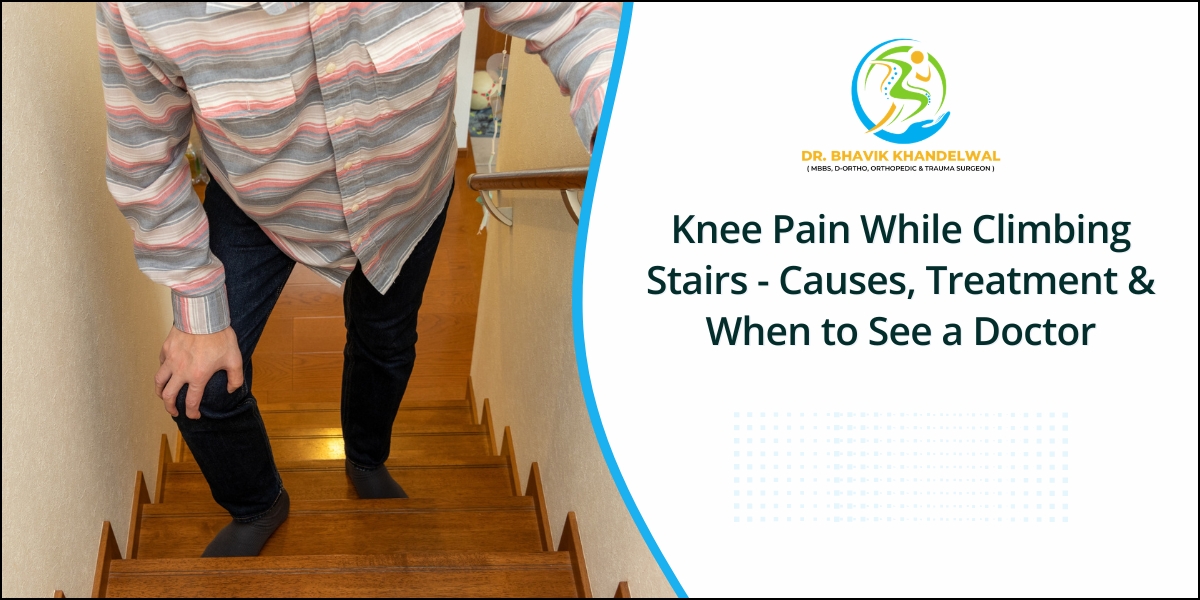
Do you feel pain in your knees whenever you climb stairs? You’re not alone. Knee pain while climbing stairs is a common problem that affects people of all ages, especially adults over 40, athletes, and those who spend long hours standing or walking.
While occasional discomfort may not be serious, persistent knee pain can indicate an underlying condition that requires medical attention. Understanding the causes and treatment options can help you take the right steps toward long-term relief.
Why Does Knee Pain Get Worse While Climbing Stairs?
When you climb stairs, your knees bear nearly three to four times your body weight. This increased pressure puts stress on the knee joint, cartilage, ligaments, and surrounding muscles.
If any part of the knee is damaged or inflamed, climbing stairs can become painful and difficult.
Common Causes of Knee Pain While Climbing Stairs
1. Osteoarthritis of the Knee
Osteoarthritis is one of the most common causes of knee pain in adults. It occurs when the protective cartilage in the knee gradually wears away.
Symptoms include:
- Pain during movement
- Stiffness in the morning
- Swelling around the knee
- Grinding or cracking sounds
Climbing stairs often becomes challenging because the damaged cartilage cannot absorb pressure effectively.
2. Patellofemoral Pain Syndrome (Runner’s Knee)
This condition occurs when the kneecap does not move properly over the thigh bone.
Common symptoms:
- Pain at the front of the knee
- Discomfort while climbing stairs
- Pain after sitting for long periods
- Clicking or popping sensation
It is frequently seen in runners, cyclists, and young adults.
3. Meniscus Tear
The meniscus acts as a shock absorber between the bones of the knee.
A tear can occur due to:
- Sports injuries
- Sudden twisting movements
- Age-related degeneration
Symptoms include:
- Sharp knee pain
- Swelling
- Locking or catching sensation
- Difficulty climbing stairs
4. Ligament Injuries
Injuries to the ACL, PCL, or other knee ligaments can cause instability and pain.
People often experience:
- Sudden pain after injury
- Swelling
- Knee weakness
- Difficulty walking or using stairs
5. Tendonitis
Inflammation of the tendons around the knee can result from repetitive stress.
It is commonly seen in:
- Athletes
- Runners
- Individuals with physically demanding jobs
Pain usually worsens during activities such as climbing stairs or squatting.
6. Excess Body Weight
Being overweight places extra pressure on the knee joints. Even a small increase in body weight significantly increases stress on the knees during stair climbing.
Over time, this can accelerate cartilage wear and contribute to chronic knee pain.
Symptoms That Should Not Be Ignored
While mild knee discomfort may improve with rest, certain symptoms require medical evaluation:
- Persistent pain lasting more than a few weeks
- Swelling that does not improve
- Difficulty walking
- Knee instability or buckling
- Locking of the knee joint
- Severe pain while climbing stairs
- Reduced range of motion
Ignoring these symptoms may lead to worsening joint damage.
How Is Knee Pain Diagnosed?
A knee specialist may recommend:
Physical Examination
The doctor will assess:
- Knee movement
- Swelling
- Joint stability
- Pain location
Imaging Tests
Depending on the symptoms, the following tests may be advised:
- X-rays
- MRI Scan
- Ultrasound
- Blood tests (in selected cases)
Accurate diagnosis is important for selecting the most effective treatment.
Treatment Options for Knee Pain While Climbing Stairs
1. Lifestyle Modifications
Simple changes can reduce pressure on the knee:
- Avoid excessive stair climbing
- Maintain a healthy weight
- Wear supportive footwear
- Avoid prolonged standing
2. Physiotherapy
Physiotherapy helps strengthen muscles around the knee and improve joint stability.
Common exercises focus on:
- Quadriceps strengthening
- Hamstring flexibility
- Balance training
- Mobility improvement
3. Medications
Doctors may prescribe:
- Anti-inflammatory medicines
- Pain relievers
- Topical pain relief gels
These provide temporary symptom relief but do not address the underlying cause.
4. Knee Braces and Support
A knee brace can help improve stability and reduce strain during daily activities. Many patients find it easier to walk and climb stairs with proper support.
5. PRP Injection Therapy
Platelet-Rich Plasma (PRP) therapy is a modern regenerative treatment used for various knee conditions.
PRP is prepared using the patient’s own blood. The concentrated platelets contain growth factors that help reduce inflammation and promote tissue healing.
Benefits of PRP Injection include:
- Non-surgical treatment option
- Reduced knee pain
- Improved mobility
- Faster recovery
- Minimal downtime
- Uses the body’s natural healing process
PRP therapy has shown promising results in patients suffering from early to moderate osteoarthritis, tendon injuries, and chronic knee pain.
Tips to Prevent Knee Pain
Follow these simple steps to keep your knees healthy:
✔ Maintain a healthy body weight
✔ Exercise regularly
✔ Strengthen leg muscles
✔ Stretch before workouts
✔ Wear comfortable footwear
✔ Avoid sudden twisting movements
✔ Use proper posture while walking and climbing stairs
Small lifestyle changes can significantly reduce the risk of knee problems.
When Should You See a Doctor?
You should consult a knee specialist if:
- Pain persists despite rest
- Climbing stairs becomes difficult
- Swelling frequently returns
- The knee feels unstable
- Daily activities are affected
Early diagnosis and treatment can prevent further joint damage and improve quality of life.
Key Takeaways
- Knee pain while climbing stairs is a common symptom of underlying knee conditions.
- Osteoarthritis, runner’s knee, tendonitis, meniscus tears, and ligament injuries are among the most common causes.
- Early treatment can prevent long-term joint damage.
- Physiotherapy, lifestyle modifications, and regenerative treatments like PRP Injection can help manage symptoms effectively.
- Consult a specialist if pain is persistent or affects your daily activities.
Consult Dr. Bhavik Khandelwal – Knee Pain Specialist in Mumbra, Thane
If you are struggling with knee pain while climbing stairs, walking, or performing daily activities, Dr. Bhavik Khandelwal, Knee Pain Specialist in Mumbra, Thane, offers advanced, non-surgical solutions for long-lasting relief. With expertise in diagnosing and treating osteoarthritis, sports injuries, tendon disorders, and chronic knee pain.